

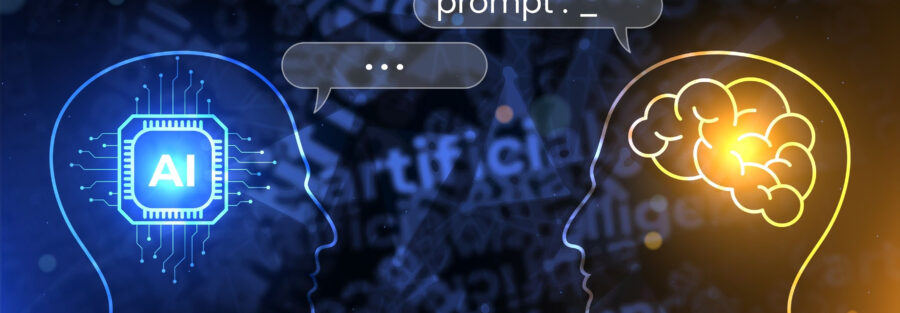
The buzz around AI is undeniable. From generating creative content to analyzing complex data, artificial intelligence is rapidly transforming our world. But with this technological innovation comes a wave of anxiety ; will AI replace human workers? The reality is far more nuanced, and far more promising. Instead of a robotic replacement, we’re witnessing the dawn of a powerful partnership.
Defining AI in Simple Terms: The Key to Collaboration
At its core, Artificial Intelligence (AI) is the ability of a computer system to perform tasks that typically require human intelligence. This includes learning, problem-solving, and decision-making. Modern AI, especially large language models, doesn’t operate autonomously like the robots of science fiction. Instead, it relies on human guidance through a process called “prompting.”
Think of AI as a highly skilled, incredibly fast digital assistant. It can sift through mountains of information, draft reports, or even brainstorm ideas. However, it needs clear, specific prompts to generate the desired outputs. This means humans are not obsolete; they are essential in the age of AI.
AI for Content Creation and Beyond
The “AI revolution” isn’t about machines taking over; it’s about humans learning to effectively communicate with them. “AI prompting” is the art of crafting precise instructions that unlock AI’s potential for various applications, including AI for content creation and streamlining workflows. It’s a skill that can be learned and mastered, just like any other.
Imagine a graphic designer using AI to generate initial design concepts. Instead of starting from a blank canvas, they provide prompts like, “Create a minimalist logo for a tech startup, using a blue and white color palette.” The AI generates multiple options, which the designer can then refine and personalize.
This doesn’t replace the designer; it enhances their workflow. It frees them from tedious tasks, allowing them to focus on their creative vision and higher-level strategic thinking. This is a prime example of AI for easy workflows.
AI for Easy Workflows: Complementing Human Strengths
AI excels at tasks that require speed, accuracy, and data processing. Humans, on the other hand, bring creativity, critical thinking, emotional intelligence, and ethical judgment. By understanding and leveraging these complementary strengths, we can create a powerful synergy, leading to AI for easy workflows across various industries:
- For writers and journalists: AI can assist with research, generate outlines, and even draft initial versions of articles. Humans retain the role of fact-checking, adding nuance, and shaping the narrative.
- For educators: AI can personalize learning experiences, generate quizzes, and provide feedback. Teachers can focus on fostering critical thinking and providing individualized support.
- For customer service: AI chatbots can handle routine inquiries, freeing up human agents to address complex issues and provide personalized solutions.
- For programmers: AI can generate lines of code and identify errors in existing code. Human expertise is required to refine the code and design the overall program architecture.
- For artists: AI can generate new forms of art and provide inspiration. Human expertise is needed to guide the AI and provide the final artistic vision.
Embracing the Future: Learning and Adaptation
The key to navigating the AI revolution is to embrace continuous learning and adaptation. Instead of fearing AI, we should focus on acquiring the skills needed to work alongside it. This includes:
- Developing strong prompting skills.
- Understanding the limitations of AI.
- Focusing on skills that AI cannot replicate, such as creativity, critical thinking, and emotional intelligence.
- Learning how to refine and check AI outputs.
The future of work is not about humans versus machines; it’s about humans and machines working together. By understanding AI and developing the skills to leverage its potential, we can unlock new levels of productivity, creativity, and innovation. The AI revolution is not a threat but an opportunity to build a more efficient, fulfilling, and collaborative future.